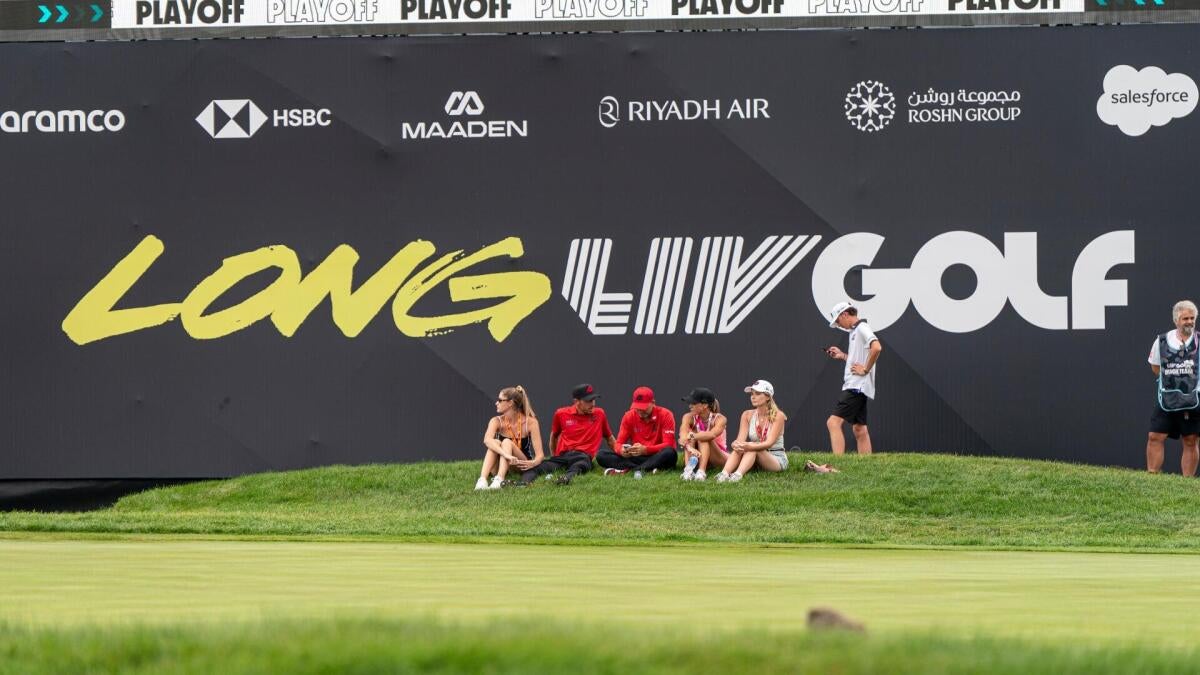
LIV Golf is officially shutting down after five years, with Saudi Arabia's Public Investment Fund (PIF) pulling all funding after the 2026 season, ending an investment of over $5 billion. The league filed for Chapter 11 bankruptcy protection and failed to secure a new financial backer for a relaunched "LIV Golf 2.0."
BC Partners withdrew a planned $300 million investment after LIV Golf failed to retain enough players, pushing the circuit toward extinction. On Thursday, LIV Golf confirmed it would begin a "wind-down of its operations" at a previously scheduled hearing in New Jersey Bankruptcy Court.
Top players now face uncertain futures. Brooks Koepka accepted a one-time PGA Tour return offer that includes a $5 million charitable donation, ineligibility for the Player Equity Program for five years, and no FedEx Cup payouts in his first year back. Jon Rahm and Bryson DeChambeau declined the same offer, and the PGA Tour has stated the Returning Member Program will not be available to them. Rahm has already worked out a deal to exit LIV Golf and plans to take the DP World Tour path, hoping to rejoin the PGA Tour in 2027. DeChambeau's situation is more complicated due to his prior involvement in an antitrust lawsuit against the PGA Tour; CEO Brian Rolapp acknowledged "scar tissue" that could affect any return.
Other notable LIV players such as Tyrrell Hatton, Joaquin Niemann, and Tom McKibbin are also expected to pursue DP World Tour status. With the PGA Tour shifting to a Championship Series and Challenger Series structure in 2028, earning top-level status will become more difficult. Many LIV players lack world ranking points from their time in the league and do not have guaranteed DP World Tour cards for 2027.
LIV Golf launched with massive guaranteed purses, signing stars including Dustin Johnson, DeChambeau, Koepka, Patrick Reed, Niemann, and Cameron Smith. The biggest coup came in December 2023 when Jon Rahm, who had repeatedly denied interest, joined for a reported $300 million. However, the league struggled to attract younger American stars and never achieved substantial television viewership, particularly in the United States.
The PIF cited the war in Iran as a factor in its decision to pull funding earlier than anticipated. CEO Scott O'Neil attempted to build a leaner LIV Golf 2.0 with BC Partners, but players who were drawn by guaranteed money showed little interest in equity-based compensation without a safety net.
Despite its failure as a standalone league, LIV Golf forced the PGA Tour to create signature events, increase purses, and restructure its schedule into a two-tier system. PGA Tour CEO Brian Rolapp compared LIV's impact to the AFL and USFL pushing the NFL to improve, saying competition "did the professional golf world a favor." LIV Golf will be remembered as an expensive experiment that reshaped the business of professional golf without establishing a lasting foothold.