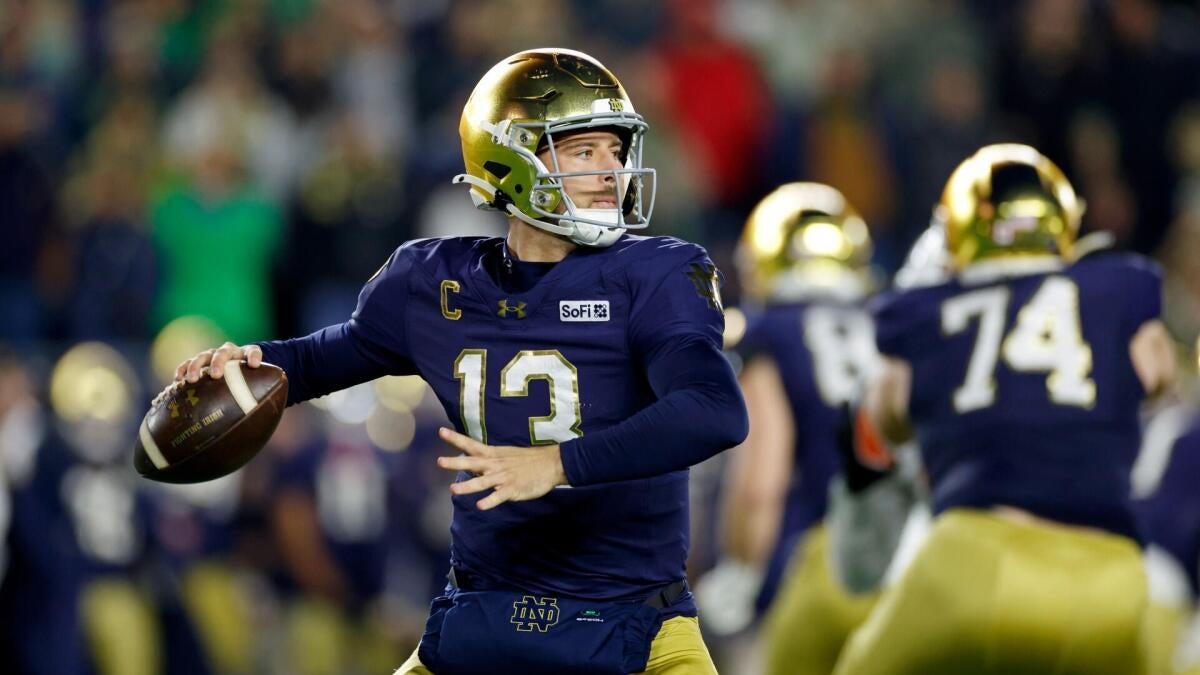
A surgical two-minute drive by Notre Dame quarterback CJ Carr against Miami has reignited debate over how NFL teams evaluate franchise quarterbacks. Carr orchestrated a clinical series, setting protections, releasing the ball quickly and accurately, and capped it with an 18-yard touchdown strike to Micah Gilbert for a 17-3 halftime lead. The performance exemplified the anticipation, processing, and accuracy that can outweigh prototypical physical tools.
Mensah's Resilience Under Pressure
On the other side, Miami's Darian Mensah spent much of the first half under siege but settled in the third quarter, engineering a comeback that drew the Hurricanes within seven points. A back-shoulder throw to Barkate highlighted his anticipation skills, though a second interception of the season — his first since Week 1 — showed the risk of throwing with anticipation into tight windows. Despite missing top receiver Malachi Toney (ankle), Mensah continued competing, making big-time throws late and giving Miami a chance to tie in the closing minutes.
Preseason Evaluations and the FRED Model
Neither quarterback entered the season as a sure-fire first-round pick. In August, both carried second-round grades. Mensah's 2025 tape at Duke showed a bigger arm but inconsistent footwork and decision-making; Carr displayed anticipation and touch but struggled under pressure and had an average arm. The FRED model, which compares college quarterbacks to previous first-round picks based on production and experience, gave Mensah a 39.4 score (near the 50 threshold historically reached by every eventual first-rounder) and Carr a 10.6, reflecting his limited starting experience.
Statistical Comparison Through Week 9
Mensah has completed 77.4% of his passes for 10.3 yards per attempt with 25 touchdowns and two interceptions. When throwing in rhythm, his completion rate rises to 83.1% with 11.4 yards per attempt — both among the best in college football. Carr has dramatically improved his pressure management: his sack rate under pressure dropped from 21% to 6.7%, and his completion percentage under pressure improved from 26.1% to 51.9%. Both have just one turnover-worthy play under pressure (Mensah 2.3%, Carr 3.3%), compared to seven for Oklahoma State's Drew Mestemaker (13%). Carr has attempted deep passes (20+ yards) on nearly a quarter of his throws, with eight touchdowns and one turnover-worthy play; Mensah completes 58.1% of his deep attempts versus Carr's 37%, but Carr has 23 more such attempts. Mensah generates significant yardage on throws behind the line of scrimmage (25% of attempts, 553 yards), while only 12.6% of Carr's passes fall into that category.
The Broader Evaluation Question
The performances underscore a recurring theme: quarterbacks like Brock Purdy (Mr. Irrelevant 2022), Kirk Cousins (fourth-round pick), and Mac Jones (Pro Bowl rookie) have succeeded with average physical tools but elite processing and accuracy. Meanwhile, teams repeatedly forgive poor decision-making and inaccuracy in prospects with rare athletic profiles. The question for NFL evaluators is not whether Carr or Mensah can make NFL throws — they have done so repeatedly — but whether the league has been too quick to forgive the quarterbacks who look the part and too slow to appreciate those who consistently play the part.


