BBC F1 correspondent Andrew Benson answered reader questions following the São Paulo Grand Prix, covering Lewis Hamilton's legacy, the reduction of "yo-yo racing," Esteban Ocon's reserve driver role, Liam Lawson's future at Racing Bulls, and the place of classic circuits on the calendar.
Hamilton's greatness and longevity
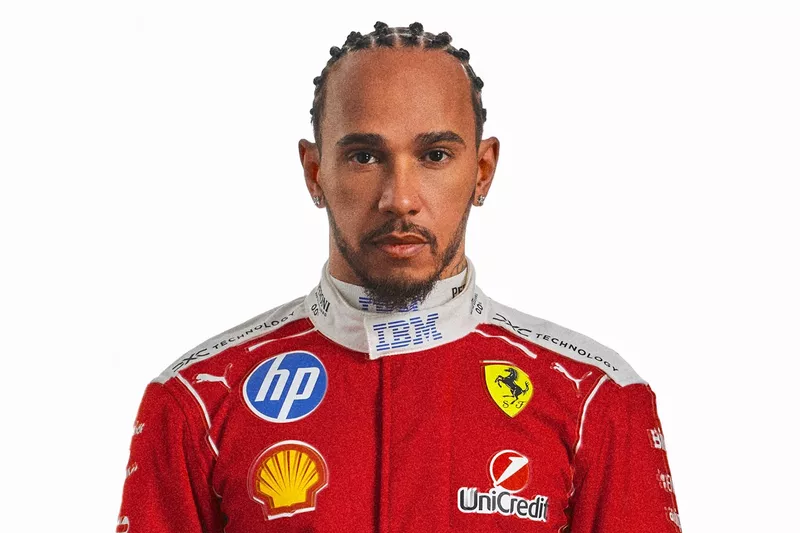
Lewis Hamilton completed his 400th Formula 1 grand prix in Brazil, holding records for most race wins and pole positions, and is tied with Michael Schumacher for seven championships. Benson describes Hamilton as unquestionably one of the greatest drivers in history, citing historic drives such as the 2008 British Grand Prix and 2021 Brazilian Grand Prix. Hamilton struggled relative to teammates George Russell (2022-2024) and Charles Leclerc (2025) during the ground-effect era, but has returned to form in 2026, performing neck-and-neck with Leclerc. Hamilton, now 41, says he still feels young and has the pace and dedication to continue. He aims to race until F1 returns to Africa, expected no earlier than 2030, when he would be 45. His current Ferrari contract is believed to end next year, requiring a new deal.
Reduction in "yo-yo racing"
The "yo-yo racing" seen early in the 2026 season, where cars swapped positions repeatedly due to energy management with the new 50-50 power units, has decreased. Benson explains that recent tracks have been less energy-starved, and teams and drivers have adapted to the new technology. Rule changes imposing energy limits on affected tracks have also flattened energy availability peaks. Further engine regulation changes shifting the energy split to 60-40 by 2028 are expected to reduce overtaking frequency but improve driveability.
Ocon's reserve driver choice
Esteban Ocon, not retained by Haas for 2027, prefers staying in F1 as a reserve driver rather than racing in another series. Benson notes that a reserve role keeps a driver current with F1 machinery through simulator work, maintains visibility, and positions them for a race seat if a regular driver becomes unavailable. Racing elsewhere risks being forgotten or perceived as past their prime.
Lawson's 2027 uncertainty
Liam Lawson's confirmation for Racing Bulls in 2027 remains pending, with Red Bull shareholders Chalerm Yoovidhya and Mark Mateschitz and F1 boss Oliver Mintzlaff deciding among Lawson, teammate Arvid Lindblad, and F2 front-runner Nikola Tsolov. Racing Bulls team boss Alan Permane advocates keeping Lawson and Lindblad together for a full season to properly evaluate Lindblad against a known benchmark, rather than making a snap decision. Permane emphasized a more scientific, patient approach to the young driver programme.
Classic circuits on the calendar
F1 balances global reach, exciting racing, circuit variety, and revenue. Classic tracks like Monaco, Silverstone, Spa, and Suzuka often cannot pay the high fees that autocracies can, but F1 makes compromises to retain them. New circuits such as Las Vegas offer spectacle over driving challenge, while upcoming permanent tracks in Qiddiyah (Saudi Arabia) and Rwanda, designed by former driver Alex Wurz, aim to be challenging and promote good racing.


