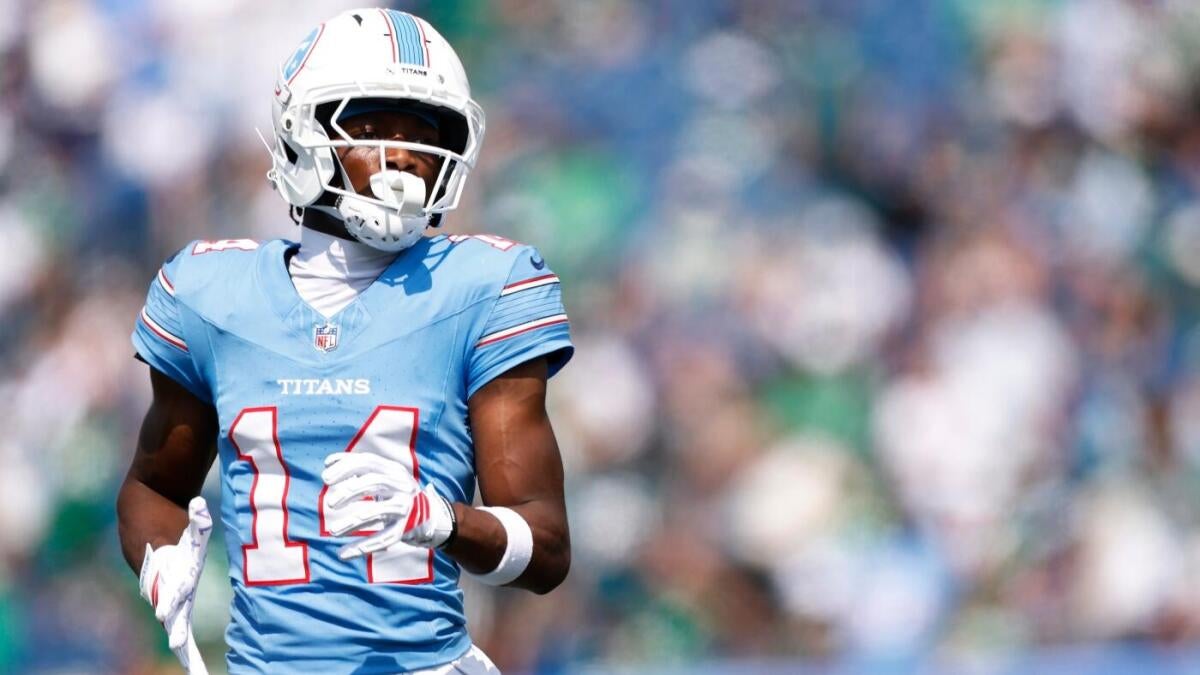
The Tennessee Titans entered the 2026 NFL Draft with needs on defense but surprised many by selecting Ohio State wide receiver Carnell Tate with the fourth overall pick. The team had signed Wan'Dale Robinson and retained Calvin Ridley in free agency, yet ownership's directive to support quarterback Cam Ward appeared to drive the choice of Tate, who caught 51 passes for 875 yards and nine touchdowns in his final Buckeyes season alongside Jeremiah Smith.
Tennessee later traded back into the first round to take Auburn edge rusher Keldric Faulk, a preseason top-10 prospect who never fully realized his potential in college. By the time Faulk was selected, four other pass rushers were already off the board, and three more — Clemson's T.J. Parker (35th), Oklahoma's R Mason Thomas (40th), and Texas A&M's Cashius Howell (41st) — went shortly after.
Tate's Rookie Production and Fit
Through the early part of his rookie campaign, Tate has shown promise but also frustration: four drops and three fumbles. He excels in zone coverage and short-to-intermediate routes but has yet to stretch the field consistently. According to Next Gen Stats, he has just one reception for 33 yards on eight targets of 20-plus air yards and ranks 42nd in EPA per target against man coverage among 53 qualifying receivers. The Titans likely sought size and an X/Z alignment complement to Robinson, though other options like Denzel Boston or Jordyn Tyson (unavailable until Week 9) were discussed.
Historical Context for First-Round Receivers
Draft history suggests the first wide receiver taken does not always become the most productive. In 2024, Malik Nabers outperformed Marvin Harrison Jr.; Justin Jefferson was the fifth receiver drafted in his class; and the 2019 first round featured only Hollywood Brown and N'Keal Harry ahead of stars like A.J. Brown, D.K. Metcalf, Terry McLaurin, and Deebo Samuel. Tate's rookie pace — projecting to 77 receptions for 944 yards — mirrors Jaxon Smith-Njigba's first year (63 catches, 628 yards, four touchdowns), who later developed into a top-tier receiver.
Faulk's Difficult Start
Faulk, who turned 22 during the season, has struggled to disengage from blocks both as a pass rusher and in the run game. His 2.8% pressure rate ranks 26th among 27 rookies with 50-plus pass-rush snaps (TruMedia), while Parker, Thomas, and Howell rank 12th, 5th, and 7th respectively. In run defense, Faulk has four tackles and three stops over 89 run downs, yielding a 4.5% tackle rate (54th) and 3.4% stop rate (46th) among 56 rookies with at least 50 run downs (Next Gen Stats). The Titans hope patience will unlock the traits that made him a top-10 prospect, but slow starters rarely become elite performers.
Long-Term Outlook
Tate's baseline projects as a high-end No. 2 receiver with top-20 potential; his college fumble and drop rates were minimal (zero fumbles, five drops in 39 games), suggesting the early issues are aberrations. Faulk's development will require significant technical improvement, particularly with counter moves and leverage. The Titans' draft strategy — offense at No. 4, defense via trade-up — reflects a dual mandate to support Ward immediately while building a pass rush for the future.


