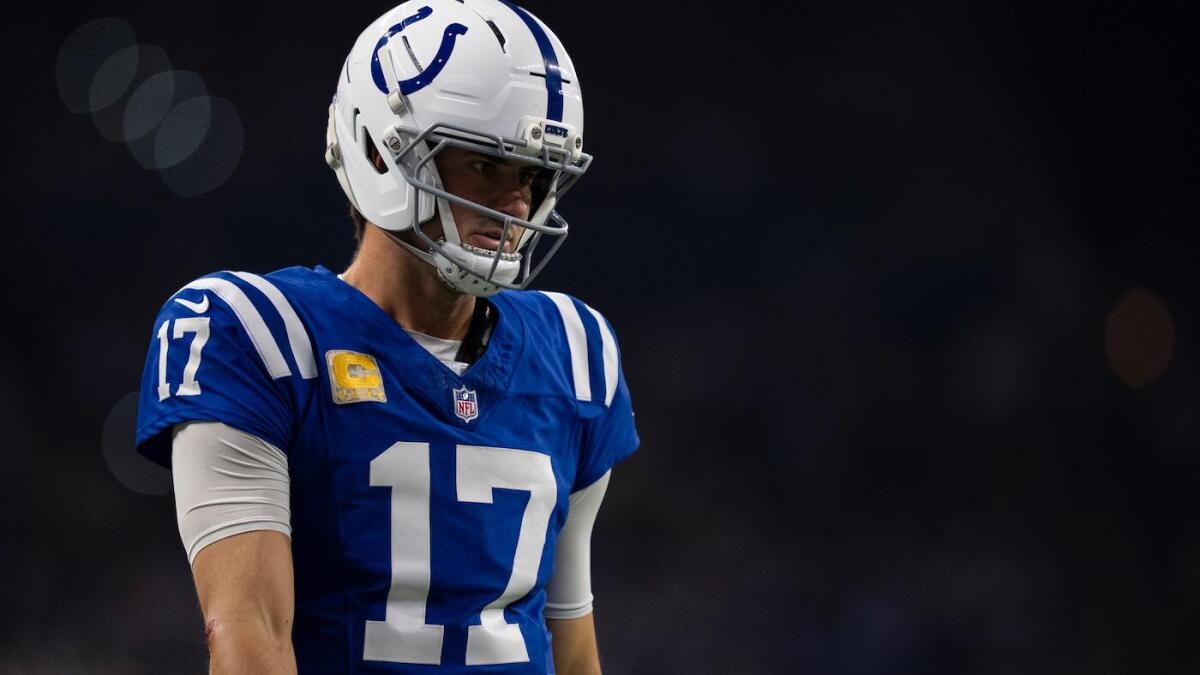
The Indianapolis Colts waived quarterback Daniel Jones less than two weeks after the 2026 NFL trade deadline, a move that highlights what critics call a mismanaged deadline strategy.
Trade Deadline Decisions Questioned
After firing general manager Chris Ballard in mid-October, the Colts entered a rebuild but opted for a partial sell-off at the deadline, moving veterans DeForest Buckner, Quenton Nelson, and Josh Downs while retaining Jones and running back Jonathan Taylor. The team's 3-8 record following a Week 11 loss to the Houston Texans prompted the Jones waiver.
ESPN reported that Indianapolis rebuffed trade interest from the Minnesota Vikings and Baltimore Ravens for Jones. The Vikings acquired Kirk Cousins for a 2027 third-round pick, while the Ravens obtained Jacoby Brissett and a 2027 fifth-round pick for a 2027 fourth-rounder and a 2028 seventh-rounder. Jones, signed to a two-year, $88 million extension this offseason, posted a 2-7 record in nine starts with a 60.3% completion rate, 191.3 passing yards per game, six touchdowns, 10 interceptions, and a 68.9 passer rating before the deadline.
Jonathan Taylor's Trade Value
Taylor, considered the most sought-after trade asset, was also kept. Analysts argue his value was highest at the deadline; any offseason deal would likely yield a diminished return due to age and mileage. The Colts, lacking a 2027 first-round pick after trading for Sauce Gardner, missed an opportunity to replenish draft capital.
Financial Fallout
Jones' waiver leaves the Colts with $35.2 million in dead cap space for 2027 (assuming he clears waivers) after paying $49.8 million for 11 games. The decision underscores what observers describe as asset mismanagement that could ripple beyond the current season.
With the rebuild underway, the organization faces pressure to define a clearer plan, whether that involves coaching changes, trading Taylor, or hiring a new general manager.


