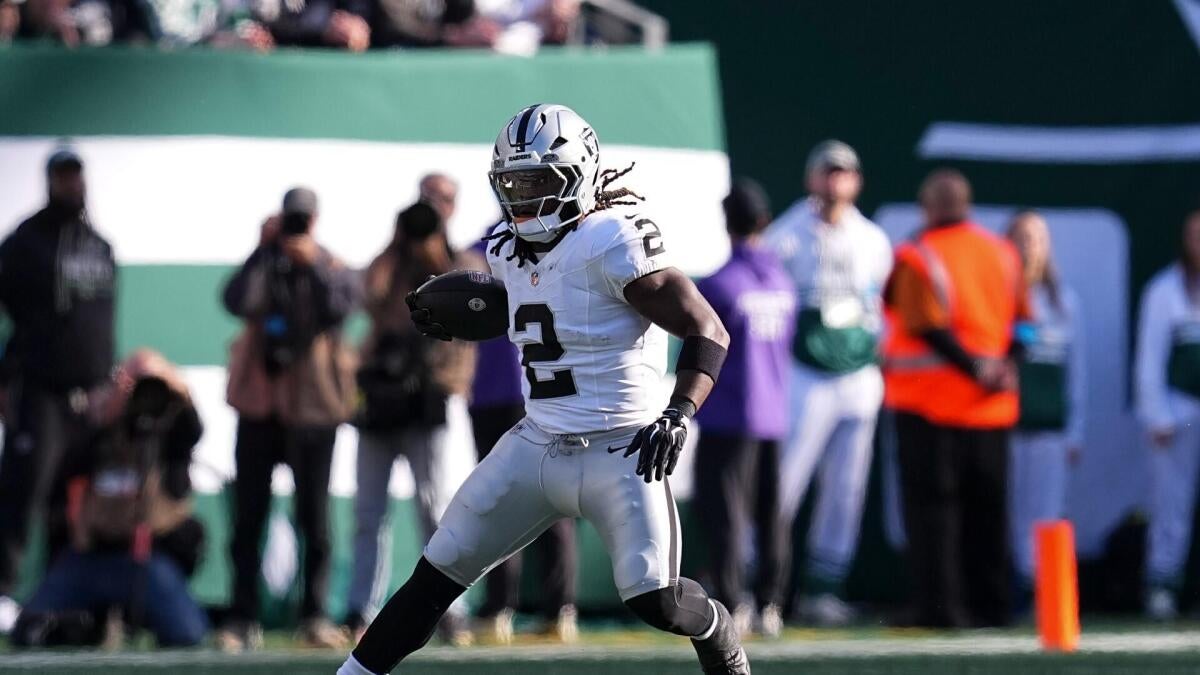
The Las Vegas Raiders selected Ashton Jeanty with the sixth overall pick in the 2025 NFL Draft, hoping he would transform their running game. Twenty-five games later, Jeanty's workload has steadily declined, culminating in just two carries for nine yards in a Week 8 win over the New York Jets. Meanwhile, fourth-round rookie Mike Washington Jr. received 25 carries for 83 yards in the same game. First-year coach Klint Kubiak, who was not with the team when Jeanty was drafted, has shown no obligation to feature the former top-10 pick.
In Arizona, the Cardinals chose Jeremiyah Love third overall, the highest-drafted running back since Saquon Barkley in 2018. Love has managed 268 rushing yards and one touchdown in six games, averaging 3.5 yards per carry, and is now headed to injured reserve with a high ankle sprain — his second ankle injury of the season.
Historical Context and Opportunity Cost
The article examines the historical track record of running backs drafted in the top 10. In 2017, Jacksonville took Leonard Fournette fourth overall; six picks later, Kansas City selected Patrick Mahomes. In 2018, the Giants drafted Barkley second overall while Josh Allen went seventh. In 2016, Dallas chose Ezekiel Elliott fourth, ahead of Jalen Ramsey, Ronnie Stanley, and DeForest Buckner; Derrick Henry was picked 45th. Even when the running back performs well, the opportunity cost of passing on potential franchise players at other positions remains a central debate.
Statistical Analysis of First-Round Running Backs
An analysis of 53 first-round running backs from 2000 to 2023 shows that 54.7% reached 3,000 scrimmage yards in their first three seasons, but only 11 reached 4,000 and seven topped 5,000. Comparisons with later-round picks reveal that players like Alvin Kamara (third round), Nick Chubb (second round), and De'Von Achane (third round) produced comparable or greater early-career output at a fraction of the draft capital and salary-cap commitment. However, the probability of finding such production after Round 1 is low: a randomly selected Day 2 back had only a 10% chance of reaching 70% of Bijan Robinson's first-three-year production.
Efficiency metrics for backs with at least 100 carries in a season during their first three years show minimal differences between first-round and Day 2 selections in yards after contact per attempt (2.93 vs. 3.10) and PFF rushing grades (76.4 vs. 76.7). The data suggests that while first-round picks receive more opportunity, they are not necessarily more effective.
Impact on Team Offense
A review of 48 first-round running back selections found little evidence that adding a top-10 back consistently improves the overall offense, even after accounting for prior team performance. A running back cannot block for himself, fix the passing game, or compensate for poor quarterback play — a reality the Raiders are currently experiencing.
Jeanty's rookie contract averages nearly $9 million per year; Love's averages $13.3 million. Neither has yet delivered the transformative impact their teams envisioned. The article concludes that when teams spend top-10 picks on running backs, being merely good is insufficient; they are betting on an exceptional player who can elevate the entire offense, justifying the cost of passing on elite talent at other positions.


