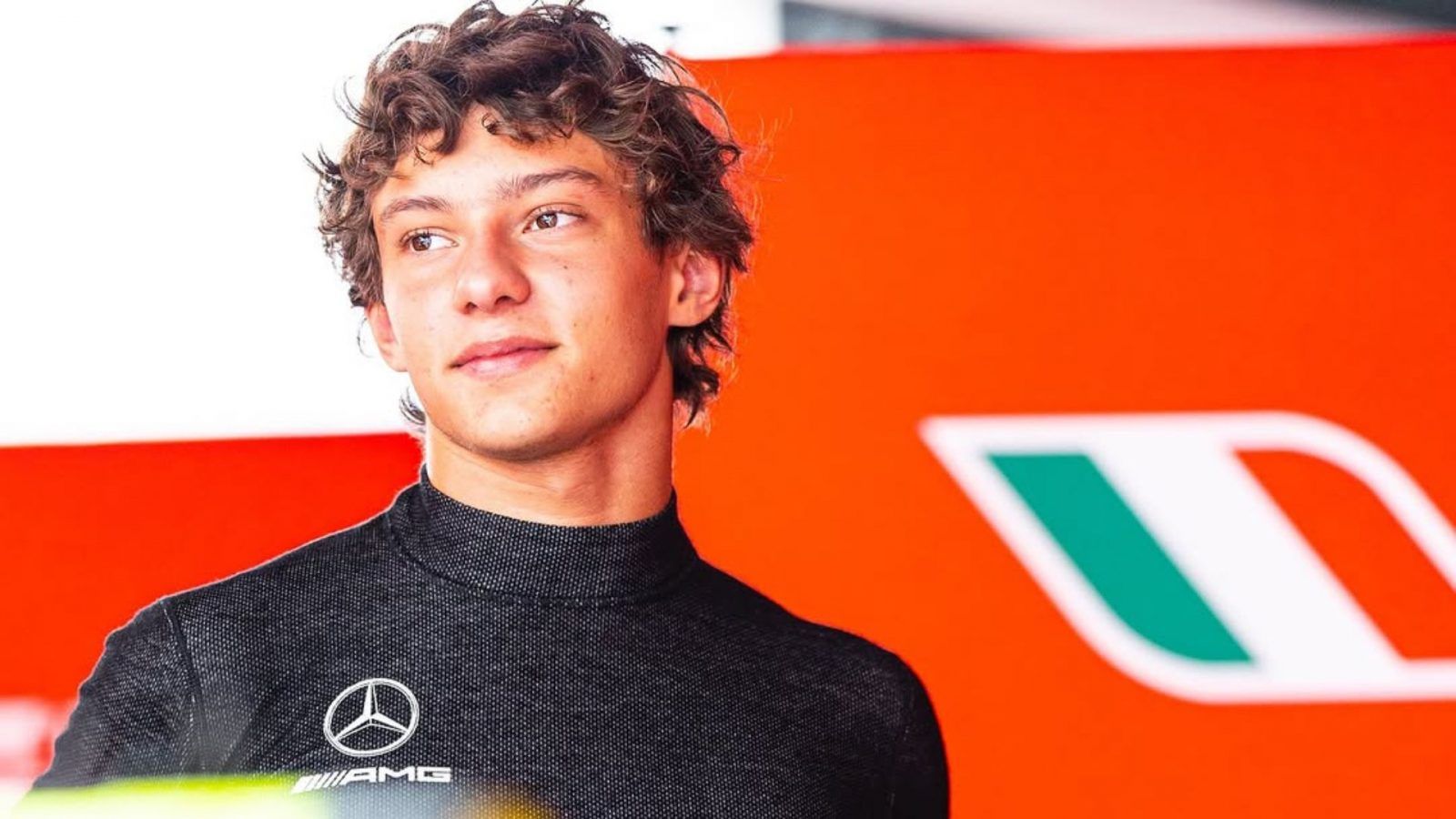
Kimi Antonelli, who turned 20 in August 2026, has become the youngest world champion in Formula 1 history after dominating his second season with Mercedes. His journey from a boy "born in a garage" to the pinnacle of motorsport is a story of precocious talent, family sacrifice, and a remarkable mental turnaround.
Early years in the garage
Antonelli's father Marco, a former touring car driver, recalls that Kimi was in the garage from 15 days old, absorbing the sounds and smells of racing. At age three, he began driving a simulator on his father's lap, insisting "no sleep, no sleep" when Marco dozed off. By five, he showed an innate grasp of racing lines and braking points in a go-kart.
Marco initially resisted his son's racing ambitions, fearing Kimi would endure the same disappointments that ended his own DTM prospects. The family, which Marco describes as "normal," could only fund karting and a year of Formula 4. But Antonelli won every category he entered, attracting Mercedes' attention by age 11.
Mercedes academy and fast-track to F1
Mercedes driver academy scout Gwen Lagrue was impressed by Antonelli's ability to excel in underpowered karts. Once in the academy, financial pressure lifted. Team boss Toto Wolff earmarked him as a potential successor to Lewis Hamilton. When Hamilton left for Ferrari in early 2024, Wolff called Marco Antonelli: "We put Kimi in Formula 1."
Antonelli had never driven an F1 car. Mercedes arranged a 20-day testing programme in older cars. Trackside engineering director Andrew Shovlin was struck by how quickly Antonelli reached the limit, comparing his car control to that of George Russell. His debut in first practice at Monza 2024 produced the fastest lap on his first run, but ended in a heavy crash at Parabolica — an error of judgment that haunted him.
Rookie struggles and mid-season slump
Wolff had publicly managed expectations, warning of "moments of brilliance and moments where you want to tear your hair out." Antonelli showed flashes, including a sprint pole in Miami, but a rear suspension change made the car nervous. Through the European swing he made too many mistakes, and the Monza crash added psychological weight. Wolff admitted a "spell of nine races that was really not good" and a second Monza practice crash in 2025 prompted a blunt conversation: "Kimi, you've got to turn this around."
Turnaround and championship dominance
After the European season, Antonelli's form transformed. In the first 11 races of 2026 he took six poles and six wins, building a 50-point championship lead. Even as Mercedes lost dominant pace to McLaren and Red Bull, he remained a consistent front-runner. His defining moment came at Monza, where he overcame a 19th-place grid penalty to win with a clinical drive, chasing down teammate George Russell in the final laps.
Wolff said the team was "all surprised" by the leap. Antonelli's father points to a pattern: in Formula 4 and Formula Regional, Kimi also started poorly before remaking his season to win titles. Max Verstappen, the only other teenager to win an F1 race, said he never doubted Antonelli would make the jump.
Mentality, family, and advice from Federer
Antonelli describes his father as his "rock." Wolff praises the "typical Italian family" — caring, loving — and notes Kimi's gentle, empathetic character balanced with intense focus. After emotional moments in Canada, Antonelli met Roger Federer at Wimbledon. Federer advised him to focus on one race at a time, control what he can, and manage emotions that cause mistakes — echoing Marco's family mantra: "live every day our best day."
Wolff's original project timeline was 2025 for experience, 2026 for results. "I think we overachieved," Marco Antonelli says. At 20, Kimi Antonelli has rewritten the record books.


